Land Use Science in Action

OPERATION MERCURY CURTAILS ILLEGAL MINING IN PROTECTED AREAS TEMPORARILY
- Alluvial gold mining threatens protected conservation and indigenous lands in the tropical Amazon, particularly in Southeastern Peru.
- Federal Military Intervention Actions by the Peruvian government attempted to minimize these activities and move miners to sanctioned mining zones.
- Analyses using remote sensing data can help assess the results of this major policy action.
- NASA’s archival and ongoing data are essential for these conservation policy analyses.
- Peru’s federal policy actions reduced mining in protected areas, shifted mining into buffer unprotected zones, but there is evidence of re-mining activity as enforcement waned.
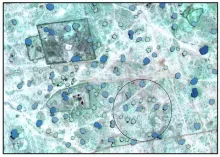
CRUCIAL ECOSYSTEM SERVICE FOR CLIMATE CHANGE ADAPTATION AT THE SAME TIME.
- Tree-based sinks are the only actions that remove excess carbon now.
- TOF at the scale of individual trees underpin livelihoods of billions of people and lead to more stable incomes under climate-stress conditions.
- NASA earth observations make individual tree carbon measurement counting part of Nature-Based Climate Solutions (NBS); this project mapped every tree in Africa.
- TOF NBS support most international programs, and White House U.S. Net Zero goals.
- Large capital investments are being made in NBS, and TOF solutions increase the relevancy and effectiveness for people’s well being and poverty alleviation.

DIFFERENT APPROACH TO U.S. DRUG POLICY NEEDED TO MEET CONSERVATION GOALS
- Counterdrug interdiction pushes cocaine trafficking into biodiverse landscapes.
- Analyses integrating remote sensing and socioeconomic data can identify and quantify land use/cover-change caused by illicit economies.
- Urgent need for such analyses to inform action to mitigate climate change and biodiversity loss in Central America.
- NASA’s role in Earth observation is essential for evaluating long-running U.S. policies.
- Long-term effects of U.S. drug policy undermine international conservation efforts.

POTENTIAL INCREASES IN WATER SCARCITY AS THE AGRICULTURAL SECTOR ADAPTS
- Water scarcity in agricultural regions is worsening as the Earth warms.
- Urgent need for local and regional analyses to formulate precision adaptation measures.
- Analyses integrating remote sensing, hydrological modeling, and economic modeling can
project future water scarcity and farmers’ responses via crop choice and irrigation investment. - NASA’s Earth observations are critical to track short-term (crop growth and seasonal water
use) and long-term (crop system transitions, irrigation investment) agricultural responses to
drought and target climate adaptation measures.

A Remote Sensing Analysis of Heat Stress, LCLUC, and Women’s Health in sub-Saharan Africa
Understanding impacts and interactions to inform adaptation strategies.
- Climate change is increasing the duration, intensity, and frequency of extreme heat events in sub-Saharan Africa.
- Human activity is driving rapid LCLUC, putting pressure on agricultural production, threatening food security, and challenging livelihood strategies.
- Extreme heat and LCLUC disproportionately impact women, yet less attention is given to these effects.
- NASA remote sensing tools can be used to study extreme heat exposure and LCLUC processes to better understand risks and develop successful adaptation strategies.