The 2018 LCLUC Webinar Series features LCLUC South/Southeast Asia Research Initiative (SARI) projects.

Tuesday, November 13, 2018 3:00 pm Eastern Standard Time (New York, GMT-05:00)
 | Presenter: South/Southeast Asia Research Initiative (SARI) The goal of SARI is to develop an innovative regional research, education, and capacity building program involving state-of-the-art remote sensing, natural sciences, engineering and social sciences to enrich Land Cover/Land Use Change (LCLUC) science in South/Southeast Asia. Our objectives are twofold. First, we aim to advance LCLUC science in the region. Second, we endeavor to strengthen existing and build new collaborations between US and South/Southeast Asia researchers in the areas of LCLUC research. To address LCLUC science, SARI will utilize a systems approach to problem-solving that examines both biophysical and socioeconomic aspects of land systems, including the interactions between land use and climate and the interrelationships among policy, governance, and land use. A central component of SARI will be the use of geospatial data from both remotely sensed and in situ sources and models. |
 | Presenter: Dr. Meha Jain Assistant Professor, University of Michigan The Future of Food Security in India: Can Farmers Adapt to Environmental Change?Food security will become increasingly threatened over the upcoming decades, due to a growing population, climate change, and natural resource degradation. This is particularly true in India, where climate change impacts are expected to be especially large, with up to a 30% loss in yield for some staple crops by mid-century (Lobell et al. 2008). Furthermore, over 40% of agricultural production relies on groundwater irrigation, however groundwater reserves are becoming rapidly depleted, with some studies estimating that a large proportion of deep wells will dry up by mid-century (Shah et al. 2009). While the impacts of environmental change on production have been well established, there is little understanding of how farmers respond to this change. Yet, it is important to account for farmer behavior as farmers may be able to reduce or eliminate the negative impacts of environmental change by adapting their cropping practices. For example, farmers may be able to reduce the impact of warming temperatures by switching to new hybrid crop varieties that are more heat-tolerant. Understanding how, why, and how effectively farmers may adapt their cropping strategies to environmental change will better identify whether India will be able to produce enough food over the upcoming decades. This proposal will examine land use and land cover change (LCLUC) of agricultural systems, and attribute these changes to long-term environmental drivers, like climate change and groundwater depletion. This will allow us to understand how effectively farmers have adapted to environmental change, and how vulnerable current agricultural systems still are to future change. Specifically, we will derive novel remote sensing products that quantify smallholder crop production, including cropped area and yield from 1995 to the present. To date, mapping the production of smallholder farms has been difficult for several reasons. First, the size of individual farms is smaller than the resolution of readily-available satellite imagery, like Landsat and MODIS, leading to issues with mixed pixels. Furthermore, ground data rarely exist to calibrate models that translate satellite vegetation indices to production measures like yield. We propose to develop unique methods to overcome these problems that build on previous work by the PIs (Jain et al. 2013, Lobell et al. 2015). We will also use remote sensing to quantify adaptation decisions, including shifting sow date, switching crop variety, and increasing irrigation. We will link these remote sensing datasets with gridded weather, groundwater depth, and panel household datasets to examine how farmers are responding to climate change and groundwater depletion. This study will be one of the first to identify specific adaptation strategies farmers adopt in response to medium to long-term environmental change. We will also evaluate how effective these strategies are in bolstering future food security. |
Wednesday, November 28, 2018, 3:00 pm Eastern Standard Time (New York, GMT-05:00)
 | Presenter:
|
 | Presenter:
Mangrove forests in South Asia provide essential ecosystem services to the regions dense coastal population, and they support important functions of the biosphere. They are under threat, however, from natural and anthropogenic forces. Scientific understanding of rates, patterns, and causes of mangrove cover change and resulting impacts on ecosystem services is limited for the region. To help fill this gap, we propose a three-year project to examine mangrove cover change from 1985 to the present in Bangladesh, India, Myanmar, Pakistan, and Sri Lanka, and to assess the consequences for two globally important ecosystem services, carbon sequestration and biodiversity conservation. We will: Objective 1: develop an operational methodology for annual monitoring of mangrove cover changes; Objective 2: create a comprehensive database of annual mangrove cover changes from 1985 to the present at 30 m resolution; Objective 3: quantify the impacts of mangrove cover changes on carbon stock changes and species extinction risks on an annual basis from 1985 to the present; and Objective 4: analyze the effectiveness of existing mangrove protection programs, and prospective cost-effective expansions of them, in reducing carbon emissions and species extinctions. The project will integrate research in remote sensing, conservation biology, and environmental economics. Research to achieve the first two objectives will emphasize analysis of Landsat data. We will preprocess Landsat data using a new automated algorithm, and we will evaluate three approaches for classifying the annual mosaic. We will compare the approaches using interpreted high resolution satellite data and field survey data from four sites and select the most accurate ones for the annual change analysis. For the third objective, we will estimate carbon stock changes by combining area data from the mangrove cover change database with carbon densities per unit area. We will use meta-analysis to estimate the latter, and we will value carbon stocks changes using published estimates of the social cost of carbon. We will investigate mangroves role in biodiversity conservation by using data from the mangrove cover change database to assess how much original forest remains and how fragmented it is, and down-scaled species range maps to determine which areas have the most endemic species facing the greatest extinction risks as a result of habitat loss and fragmentation. For the fourth objective, we will build on the other research and conduct three types of economic studies: conventional retrospective evaluations of the impacts of protection programs on avoided mangrove deforestation and degradation in all five countries; and, for Bangladesh and India, novel retrospective evaluations of the impacts of protection on carbon sequestration and biodiversity conservation, and prospective analyses of new mangrove areas to protect in order to cost-effectively enhance carbon sequestration and biodiversity conservation. |
Tuesday, December 18, 2018 11:00 am Eastern Standard Time (New York, GMT-05:00)
 | Presenter: Dr. Tatiana Loboda, Myanmar is an emerging democracy that bears by far the heaviest malaria burden in Southeast Asia, the region that has been the historical gateway for the global dissemination of drug-resistant malaria. For almost fifty years, Myanmar has been mostly closed to outside influences and economic interactions also effectively isolating the population within the country from international activities aimed at the global malaria elimination. The greater integration of Myanmar into the global and regional economy comes with greater freedom in flow of people across the region, however, this poses a concern regarding the spread of malaria in general and particularly dissemination of ACT-resistant malaria in South Asia. In this study, we propose to examine the role that land cover and use play in determining population exposure to malaria in Ann Township of Rakhine State. As a remote and isolated region with a current high level of endemic malaria and limited access to treatment, this region has the potential to become a notable source of malaria infection across Myanmar and South Asia (particularly towards Bangladesh and India). With the post-election anticipation of a more open society and a greater integration in the country-wide and regional economic activity, malaria control within Rakhine State is a crucial component of a successful malaria elimination agenda in South and Southeast Asia and globally. The major scientific goal of this proposal is to develop a deeper understanding of the malaria exposure and transmission as a function of human activities, land use, and human mobility at various scales for remote rural populations in Myanmar where malaria levels are high. In this study we plan to pursue the major overarching research question: What environmental and land use factors are contributing to the observed differences in malaria presence and prevalence between the villages in Ann Township of Rakhine State in Myanmar? We also aim to make substantial methodological advancements in prototyping components (mapping of malaria-relevant land surface properties at the village scale, observations of changes in environmental conditions at 8-day repeat cycle, and human flow patterns) for an active satellite data-based monitoring system to forecast potential for malaria outbreaks at the high-to-moderate scale in support of targeted malaria elimination agenda in regions of endemic malaria. Specifically, we will develop methods to support integration of multisensor data streams into a high-to-moderate resolution monitoring system, that would use data fusion from coarse (MODIS, VIIRS), moderate (Landsat and Sentinel 2), and very high (e.g. WorldView and GeoEye systems) optical and thermal and microwave (Sentinel 1) data to assess dynamic malaria outbreak potential at the village scale. The proposed project directly addresses the first component of the current solicitation aimed at studying the implication of land cover and land use changes in terms of their impacts on the vulnerability of populations in South Asia. This is a highly interdisciplinary project that brings together experts in remote sensing, geospatial analysis, social science and public health to further the global malaria elimination agenda and build the in-country capacity for research and public health management. The proposing team has a wide group of incountry collaborators and will specifically aim to train local Myanmar scientists, promote capacity building, and transfer the knowledge and management of the developed system to local scientists in accordance with the priorities of the South Asia Research Initiative (SARI) agenda. |
 | Presenter:
Artificial afforestation programs are emerging as important policy interventions globally to increase carbon sequestration, yet there has been little systematic study of the impacts of afforestation programs on the livelihoods of forest dependent people. Afforestation projects do not simply improve ecosystem service provision, as widely assumed; they replace other land-cover types such as grasslands, savannas, or degraded forests thus changing the mix of goods provided by these ecosystems. Depending on the species planted and the success of the plantation, afforestation may increase the availability of timber and fuelwood while decreasing availability of fodder and some non-timber forest products. Livelihood impacts will depend on the importance of these goods and services to different households, the availability of alternatives, and the capacity of households to respond. As a result, plantations may improve the livelihoods of some households while hurting others, particularly those dependent on non-forest resources produced on lands converted to plantation. Better understanding of the effects of plantations on livelihoods is crucial for designing policies that maximize the positive benefits and mitigate negative impacts of afforestation. We propose to study the impact of afforestation programs in India, a country in which afforestation efforts are extensive, on the livelihoods of the rural poor. We will do so by combining recent government data on afforestation with long-term estimates of afforestation based on NASA satellite data and household surveys in 140 villages with varying levels of exposure to afforestation. In April of 2016, we obtained government records for all 2252 plantations made by the state forest department in the Kangra district of the Western Himalayan state of Himachal Pradesh between 2005-2015. We will combine this data with ground-truthing in a subset of these plantations. We will conduct land-cover/land-use change (LCLUC) analysis based upon use of an advanced image endmember-estimation algorithm and spectral unmixing/endmember mapping. This will allow us to detect and differentiate different types of small plantations using historical Landsat data. We will conduct household livelihood surveys in a sample of 140 villages which have been exposed to different types of plantations. Combining estimates of afforestation activities with household livelihood data will allow us to estimate, using regression and propensity score matching techniques, the impacts of afforestation on the livelihoods of households with different characteristics. These analyses will allow us to develop guidelines, which will help Indian policy-makers develop and implement plantation programs that align the imperative for carbon sequestration with the needs and interests of the poor. |
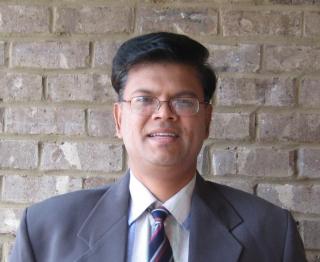
 | Host: Dr. Garik Gutman Manager LCLUC Landsat Program Scientist Summary: Dr. Garik Gutman is Program Manager for the NASA Land-Cover/Land-Use Change (LCLUC) Program. His current research interests include the use of remote sensing for detecting changes in land cover and land use, and analyzing the impacts of these changes on climate, environment and society. His NASA research program helps to develop the underpinning science and promotes scientific international cooperation through supporting the development of regional science networks over the globe under the GOFC-GOLD international program. |
 | Moderator:
|
 | Moderator: Meghavi Prashnani LCLUC Program Support Doctoral Student, University of Maryland |