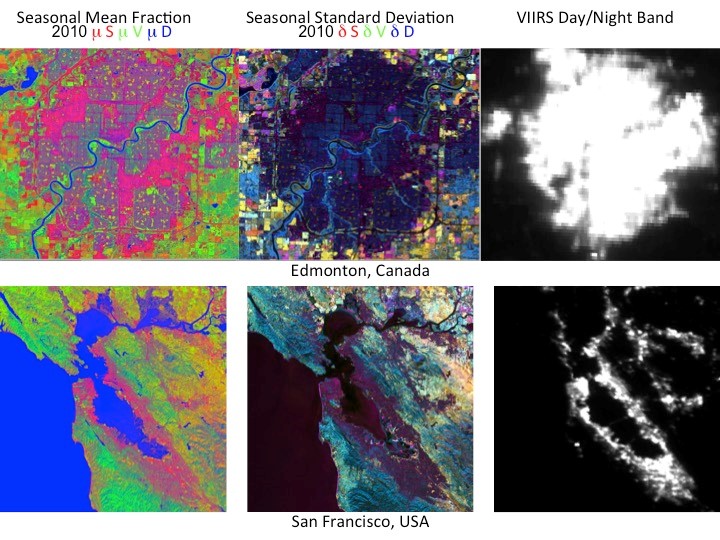
Using Landsat Global Land Survey Data to Measure and Monitor Worldwide Urbanization
Impervious surfaces, mainly artificial structures and roads, cover less than 1% of the world’s land surface (1.3% over USA). Regardless of the relatively small coverage, impervious surfaces have a significant impact on the environment at scale from the local to the global. They are the main source of the urban heat island effect, and affect not only the energy balance, but also hydrology and carbon cycling, and both land and aquatic ecosystem services. In the last several decades, the pace of converting natural land surface to impervious surfaces has increased.